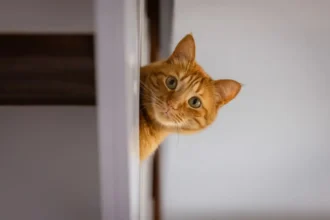
Why Apartment Cats Need Special Consideration
Living in an apartment can still provide a happy and healthy environment for cats when the right breed and lifestyle are chosen. While most cats adapt better to indoor living than many other pets, certain breeds are naturally calmer, quieter, and more comfortable in smaller spaces.
Apartment cats benefit from environments that provide mental stimulation, climbing opportunities, and peaceful routines. Loud, highly energetic, or extremely territorial cats may struggle more in compact homes.
Choosing the right breed helps reduce stress for both owners and pets.
Indoor apartment cats often live longer because they avoid outdoor dangers such as traffic, predators, disease exposure, and harsh weather.
However, apartment cats require enrichment to prevent boredom and inactivity.
British Shorthair
The British Shorthair is one of the best cat breeds for apartment living because of its calm and independent personality.
These cats are generally quiet, gentle, and low maintenance.
British Shorthairs enjoy human companionship but are usually not overly demanding.
Their relaxed nature makes them well suited for smaller homes and busy owners.
They often spend hours resting comfortably near windows or lounging on furniture.
Although playful during kittenhood, adult British Shorthairs usually become calm and steady companions.
Their dense coats require regular brushing to reduce shedding.
Ragdoll
Ragdolls are affectionate and relaxed cats known for their gentle personalities.
They adapt extremely well to indoor environments and often enjoy following owners around the apartment.
Ragdolls are famous for becoming limp and relaxed when picked up, which explains their unusual breed name.
These cats are social and enjoy companionship without being overly hyperactive.
Because of their trusting personality, Ragdolls are usually safer as indoor-only pets.
Their semi-long coats require regular grooming to prevent matting.
Ragdolls are often excellent choices for families and first-time cat owners.
Scottish Fold
Scottish Folds are recognizable because of their folded ears and sweet facial expressions.
These cats are typically calm, adaptable, and affectionate.
Scottish Folds enjoy interactive play but usually do not become excessively energetic.
Their quiet personalities make them suitable for apartment living where noise control matters.
Many Scottish Folds enjoy sitting beside owners while relaxing quietly.
Potential owners should choose responsible breeders because the breed may develop joint problems associated with cartilage issues.
Persian Cat
Persian cats are known for their luxurious coats and peaceful temperament.
They prefer quiet indoor lifestyles and usually enjoy calm apartment environments.
Persians are less likely to climb excessively or create chaos compared to more energetic breeds.
Most Persians enjoy lounging comfortably and receiving gentle affection.
Their long fur requires daily grooming to prevent tangles and matting.
Persian cats are generally quiet and soft-spoken, making them ideal for shared living spaces.
Russian Blue
Russian Blues are intelligent and reserved cats with beautiful blue-gray coats.
They adapt well to indoor living because they enjoy stable routines and peaceful environments.
These cats are affectionate with trusted owners but may appear shy around strangers.
Russian Blues are generally quiet and clean animals.
They often entertain themselves independently, which helps when owners are away during the day.
Their short coats are easy to maintain with minimal grooming.
Exotic Shorthair
The Exotic Shorthair is often described as a short-haired version of the Persian cat.
These cats share the Persian’s calm and affectionate personality while requiring less grooming.
Exotic Shorthairs enjoy peaceful indoor routines and adapt well to smaller living spaces.
They are playful without being overly active.
Their relaxed behavior makes them excellent companions for apartment residents.
Exotic Shorthairs usually form strong emotional bonds with their owners.
Siamese Cat
Siamese cats are highly social and intelligent.
Although more vocal than some breeds, they adapt very well to apartment living when owners provide enough attention and stimulation.
Siamese cats dislike loneliness and enjoy interactive play.
Puzzle toys, climbing structures, and daily interaction are important for this breed.
Their sleek short coats require minimal grooming.
Owners seeking quiet cats may prefer calmer breeds, but affectionate and interactive households often love Siamese personalities.
Maine Coon
Maine Coons are large cats, but many adapt surprisingly well to apartment life.
Despite their size, they are usually gentle and relaxed indoors.
Maine Coons are intelligent and playful but generally not destructive.
Providing climbing trees and scratching posts helps keep them active.
Their friendly nature makes them excellent companions for families and other pets.
Regular grooming is important because of their thick coats.
Burmese Cat
Burmese cats are affectionate and people-oriented.
They enjoy close human companionship and often seek attention actively.
These cats are playful but adapt well to indoor apartment environments.
Burmese cats usually remain emotionally attached to their owners and dislike isolation.
Interactive toys and social interaction help prevent boredom.
Their short coats require very little maintenance.
Sphynx Cat
The Sphynx is known for its hairless appearance and energetic personality.
These cats are extremely social and affectionate.
Sphynx cats often seek warmth and enjoy cuddling with owners.
Apartment living suits them well because indoor environments protect their sensitive skin.
Despite lacking fur, Sphynx cats require regular skin cleaning to remove oils.
Their playful nature means they benefit greatly from climbing furniture and interactive toys.
Important Features of Apartment-Friendly Cats
Quiet Personality
Cats living in apartments should ideally have calm vocal behavior to avoid disturbing neighbors.
Quiet breeds usually adapt better to shared walls and smaller spaces.
Moderate Energy Levels
Extremely energetic cats may become frustrated in small apartments without enough stimulation.
Balanced activity levels are ideal.
Adaptability
Apartment-friendly cats usually adjust well to indoor routines and smaller territories.
Flexible personalities help reduce stress.
Affectionate but Independent Nature
Many apartment owners work during the day.
Cats that tolerate short periods alone while still enjoying companionship often adapt best.
Tips for Keeping Apartment Cats Happy
Providing vertical climbing spaces increases usable territory for indoor cats.
Cat trees, shelves, and window perches help reduce boredom.
Interactive toys and daily play sessions support physical and mental health.
Scratching posts are essential for healthy claw maintenance.
Keeping litter boxes clean is especially important in smaller homes.
Window views and puzzle feeders also help enrich indoor environments.
Common Challenges of Apartment Living With Cats
Limited space may increase boredom if enrichment is lacking.
Some cats may become overweight due to inactivity.
Noise sensitivity can also become an issue in busy apartment buildings.
Proper exercise, routines, and quiet resting areas help reduce stress.
Multi-cat households may require extra litter boxes and vertical territory.
Benefits of Indoor Apartment Cats
Indoor apartment cats often experience fewer injuries and illnesses.
Owners can monitor diet, behavior, and health more easily indoors.
Apartment cats also tend to develop close relationships with their owners because of constant proximity.
Well-enriched indoor cats can live long and emotionally healthy lives.
FAQ
Can cats live happily in apartments?
Yes, many cats adapt extremely well to apartment living when provided with enrichment and proper care.
Which cat breed is the calmest for apartments?
British Shorthairs and Ragdolls are among the calmest apartment-friendly breeds.
Are energetic cats bad for apartments?
Not necessarily, but they require more playtime and stimulation indoors.
Do apartment cats need climbing trees?
Yes, vertical spaces help cats exercise and reduce boredom.
Is one cat enough for apartment living?
Yes, many cats live happily alone if owners provide attention and enrichment.
Conclusion
Many cat breeds thrive in apartment environments when their emotional and physical needs are met properly. Calm, adaptable, and affectionate breeds such as British Shorthairs, Ragdolls, Persians, and Russian Blues are especially popular among apartment owners. Providing enrichment, vertical spaces, regular play, and stable routines helps indoor cats remain healthy, happy, and mentally stimulated even in smaller homes.