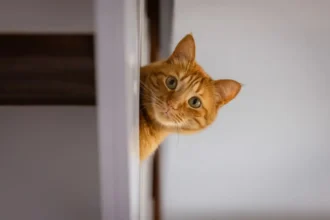
Understanding Sudden Personality Changes in Cats
A cat that suddenly becomes more distant, more affectionate, more aggressive, or unusually quiet is not “changing personality” in a human sense. Instead, these shifts reflect changes in internal state, environment, health, or learning patterns that alter observable behavior.
Cat personality is relatively stable at a core level, but expression of that personality can vary significantly depending on conditions.
The Difference Between Personality and State
In feline behavioral science, personality refers to long-term temperament traits such as boldness, sociability, or reactivity.
State refers to temporary conditions influenced by stress, health, environment, or recent experiences.
Most perceived “personality changes” are actually shifts in state rather than true personality transformation.
Health-Driven Behavioral Shifts
Physical health is one of the most common causes of sudden behavior changes.
Pain, dental issues, internal discomfort, or illness can cause a previously social cat to withdraw.
Conversely, some cats become clingier when they feel unwell, seeking comfort and protection.
Because cats hide pain instinctively, behavioral change is often the first visible symptom of medical issues.
Stress-Induced Behavioral Transformation
Environmental stress can rapidly alter feline behavior.
Changes such as moving homes, new pets, altered routines, or loud environments increase cortisol levels.
Elevated stress can make a calm cat reactive or an active cat withdrawn.
Once stress levels stabilize, behavior often returns closer to baseline.
Social Relationship Changes
Shifts in human-cat interaction patterns can also alter behavior.
Reduced attention may cause a cat to become more independent or less social.
Increased overstimulation or rough handling may lead to avoidance behaviors.
Cats continuously adjust their behavior based on reinforcement history with humans.
Hormonal and Biological Factors
Hormonal fluctuations, especially in unspayed or unneutered cats, can significantly impact behavior.
Mating cycles may increase vocalization, roaming, or irritability.
Age-related hormonal changes can also influence energy levels and sociability.
These biological factors can create the impression of personality change.
Cognitive and Aging Influences
As cats age, cognitive processing and sensory perception shift.
A senior cat may appear more confused, less playful, or more dependent.
These changes are gradual but can appear sudden when noticed after a gap in observation.
Memory changes and sensory decline both contribute to altered behavior expression.
Trauma and Emotional Triggers
A single negative event can significantly alter behavior patterns.
Fear conditioning may cause avoidance of specific locations, people, or objects.
Even after the event, the emotional association remains active in memory.
This can result in sudden behavioral shifts without visible cause to the owner.
Environmental Micro-Changes
Small environmental changes often go unnoticed by humans but are significant to cats.
New furniture placement, scent changes, or altered lighting can affect comfort levels.
Cats rely heavily on environmental consistency for emotional stability.
Disruption of familiar sensory cues may temporarily alter behavior.
Learning and Reinforcement Effects
Cats continuously learn from consequences.
If a behavior suddenly produces a new outcome, the cat may adjust its strategy.
For example, increased attention after vocalizing may increase vocal behavior.
This learning process can reshape observable personality traits over time.
Overstimulation and Behavioral Reset
Excessive stimulation can cause a temporary behavioral shutdown or shift.
After intense play or stress, cats may become unusually calm or withdrawn.
This is a neurological reset response rather than personality change.
The cat returns to baseline after recovery.
Attachment System Rebalancing
Cats adjust attachment levels based on perceived security.
A secure cat may appear independent, while an insecure cat becomes clingy.
Changes in caregiver availability can shift attachment behavior quickly.
These shifts reflect emotional regulation rather than identity change.
Misinterpretation by Humans
Humans often interpret behavioral variation as personality change due to anthropomorphic bias.
Cats are expected to behave consistently, but they are highly responsive to context.
What appears as inconsistency is often adaptive behavioral flexibility.
Seasonal and Environmental Cycles
Seasonal changes can influence activity levels and mood.
Light exposure, temperature, and outdoor stimuli affect energy patterns.
Cats may become more active in certain seasons and more sedentary in others.
These cycles can be mistaken for behavioral transformation.
Stress Recovery and Behavioral Reversion
When stress is reduced, cats often return to previous behavioral baselines.
This demonstrates that the core personality was never lost, only suppressed or altered.
Recovery may appear as “another personality change” but is actually normalization.
Warning Signs Behind Sudden Change
Sudden and extreme behavioral shifts may indicate underlying medical or psychological issues.
Loss of appetite, litter box changes, or extreme aggression require attention.
Early detection improves outcomes significantly.
Stabilizing Behavioral Consistency
Routine, environmental stability, and proper enrichment help maintain consistent behavior expression.
Predictability reduces unnecessary stress-induced fluctuations.
Balanced interaction supports emotional regulation.
FAQ
Do cats really change personality suddenly?
Usually not; they change behavior due to internal or external factors.
Is sudden aggression a personality change?
It is often caused by stress, pain, or overstimulation.
Can cats become more affectionate over time?
Yes, especially with improved trust and environment.
Do cats have fixed personalities?
They have stable traits but flexible behavioral expression.
When should I worry about behavior changes?
If changes are sudden, extreme, or accompanied by physical symptoms.
Conclusion
Sudden changes in cat behavior are rarely true personality transformations. Instead, they reflect shifts in health, environment, emotional state, or learning history. Understanding these underlying mechanisms allows for accurate interpretation and better care, ensuring cats remain emotionally and physically balanced throughout their lives.